How to Make Sustainability More Than a Buzzword Behind the Bar
Sustainability in bars has become a bit of a greatest hits album. Everyone knows the talking points. Everyone knows the aesthetic. Yet very few people are actually pulling the big levers that make a difference.
Over the last year, I’ve taken this talk around the world — six trade shows, five markets, hundreds of bartenders and operators — and the reaction has been the same everywhere:
“Why has no one explained it like this before?”
Probably because a lot of what we call “sustainability” in hospitality is theatre. Neat ideas, clever garnishes, great Instagram content… low impact.
This blog breaks down the same seminar, slide by slide, using real examples from the deck. You can drop your slides straight in. And hopefully it gets the industry thinking bigger than citrus waste and metal straws.
A quick intro

You know the CV already: Archive & Myth, Renais Spirits, consultancy, new openings, the usual chaos. I live in that overlap between drinks, creativity and operations. And because of that, I see where sustainability works… and where it falls flat.
Why talk about sustainability at all?
Because the things bartenders obsess over — citrus husks, fancy syrups, “zero waste” cocktails — aren’t the things that actually move the needle. They raise awareness, yes. But the true environmental impact of a venue lives in water, banking, energy, supply chain, waste and agriculture.
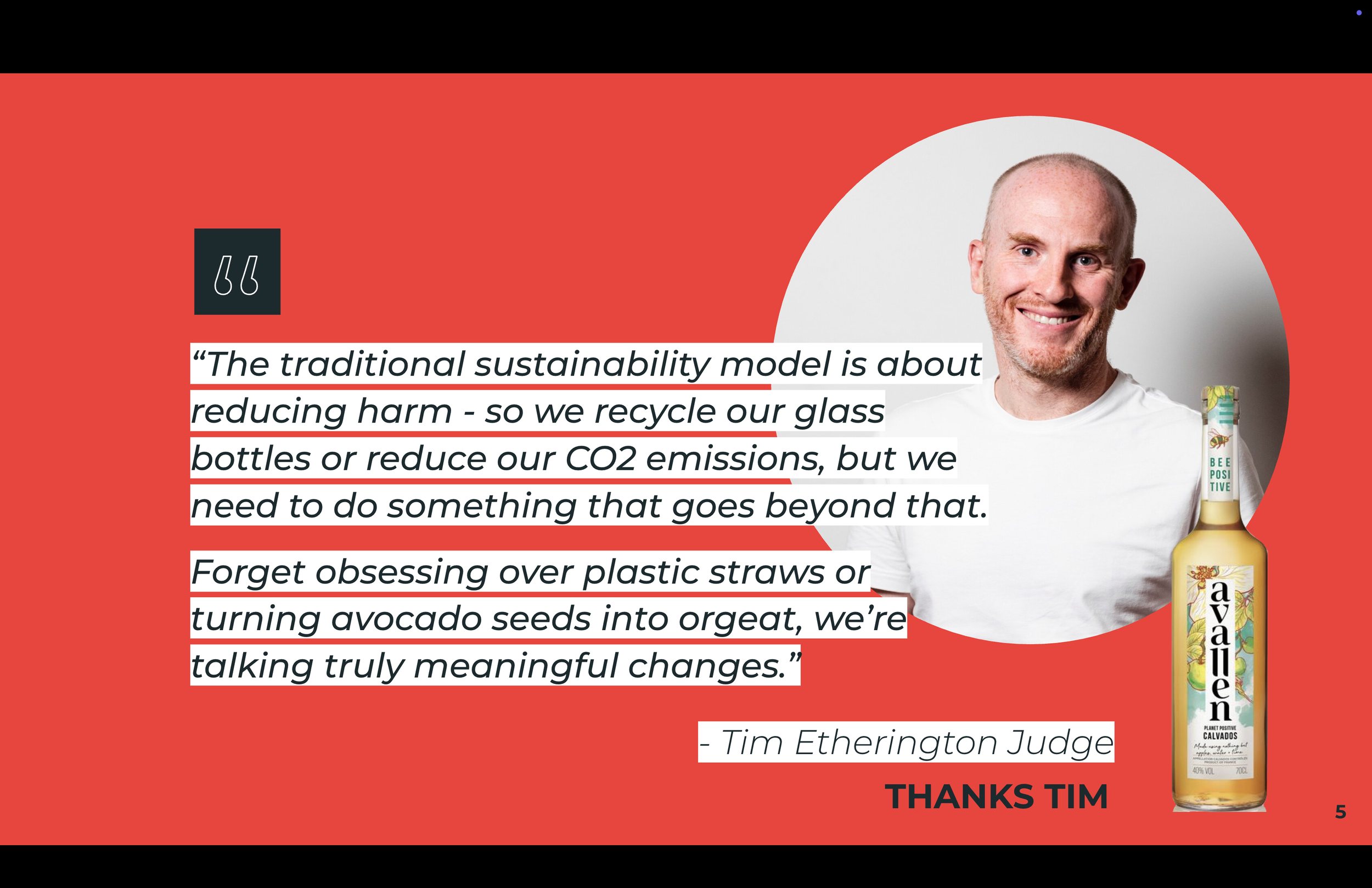
Tim Etherington-Judge says it perfectly: reduce harm and contribute something meaningful.
Greenwashing vs transparency
Bars aren’t sustainable. Restaurants aren’t sustainable. The business model isn’t set up that way.
So let’s stop pretending we’re “eco-warriors” because we batch a cordial
Be honest. Guests respond to honesty.
Transparency is worth more than performative greenness.
So how does sustainability actually show up in a bar?
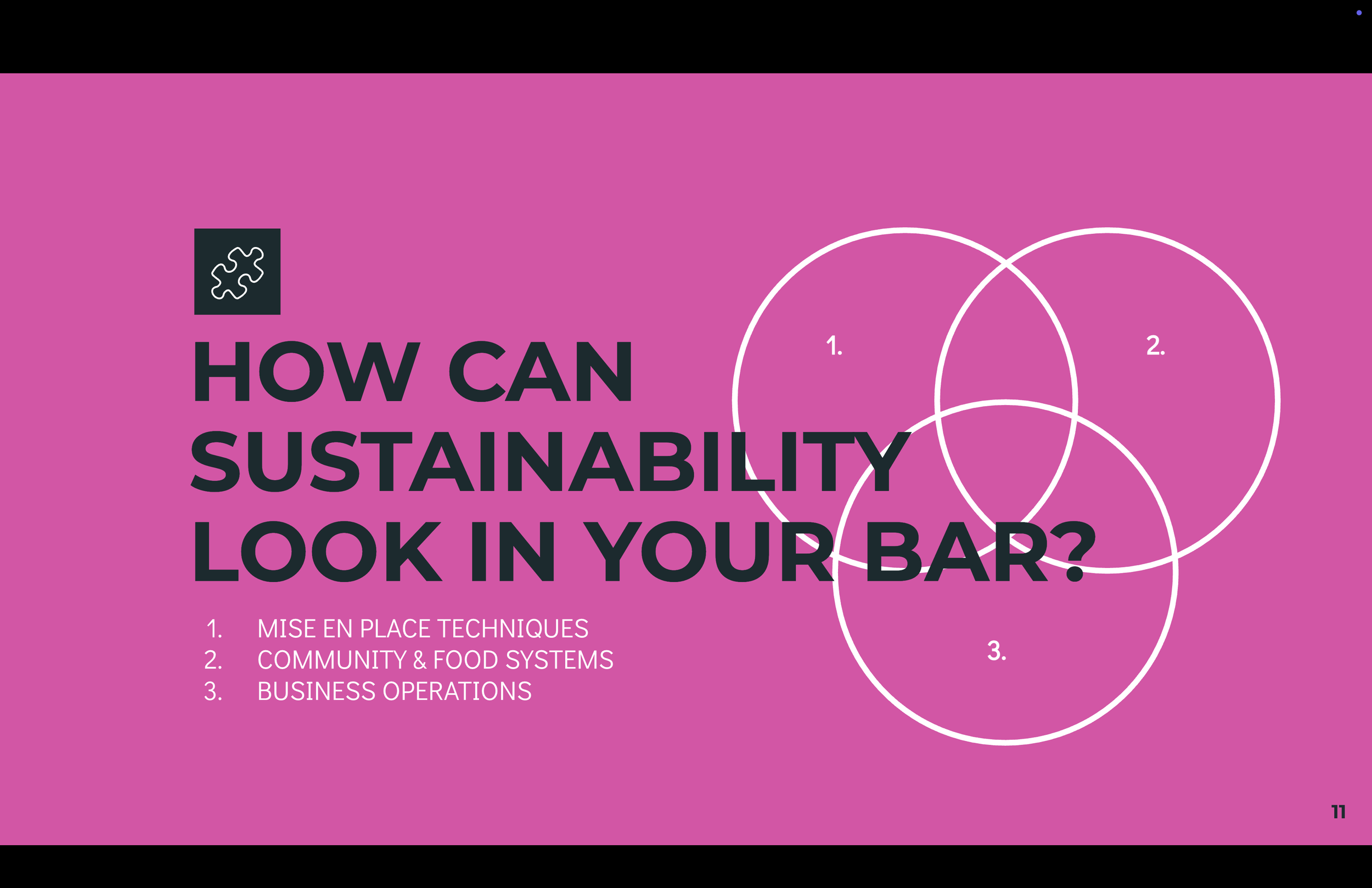
It comes down to three things:
Technique — how you prep, store and serve
Community & food systems — how your menu interacts with your environment
Operations — everything behind the scenes that guests never see
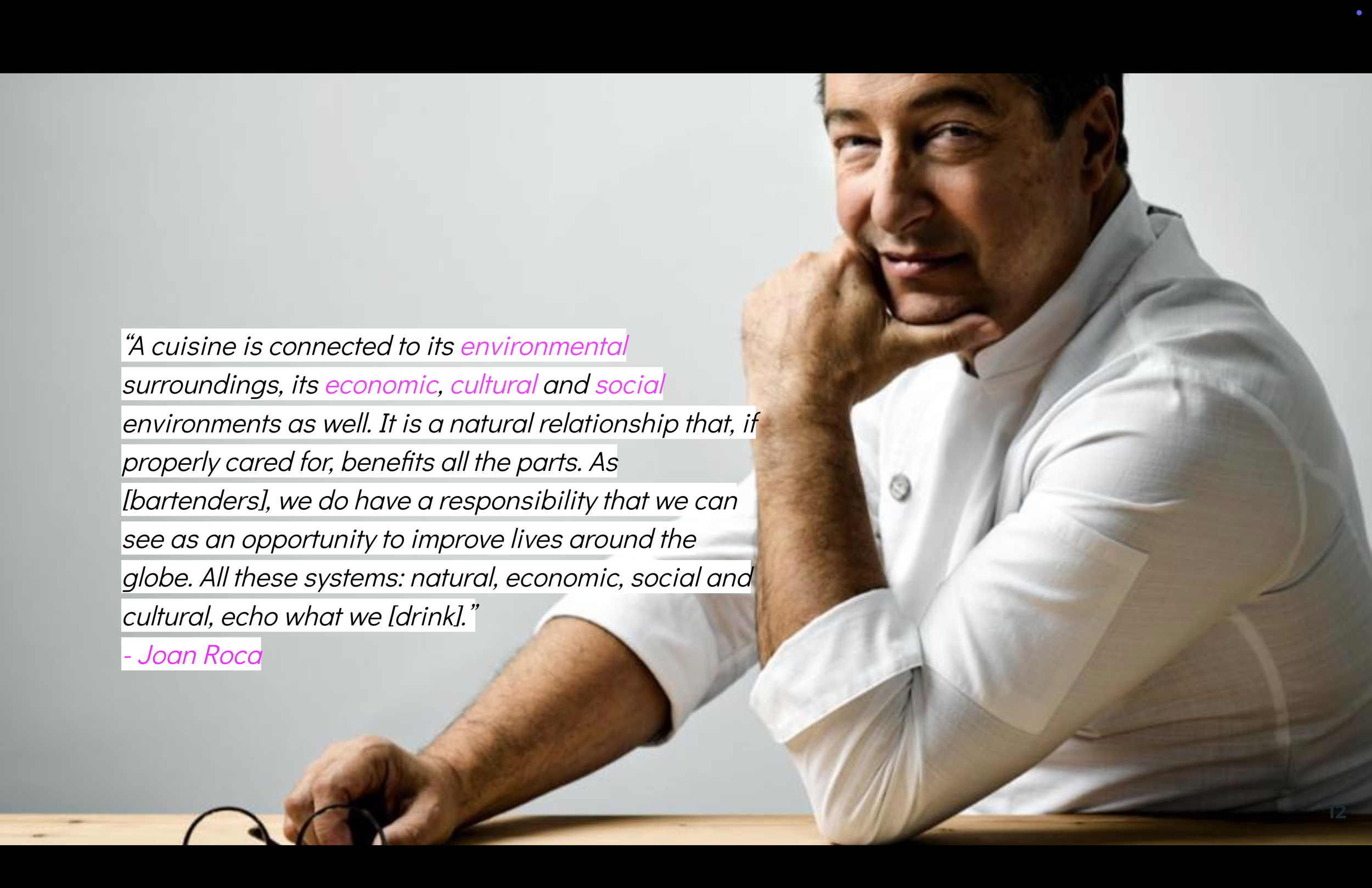
Joan Roca has a beautiful way of explaining this. A bar mirrors its environment — ecological, economic, social. Once you realise that, you start making decisions differently.
First big lever: your bank
Everyone panics about citrus waste while their business bank is pumping billions into fossil fuels.

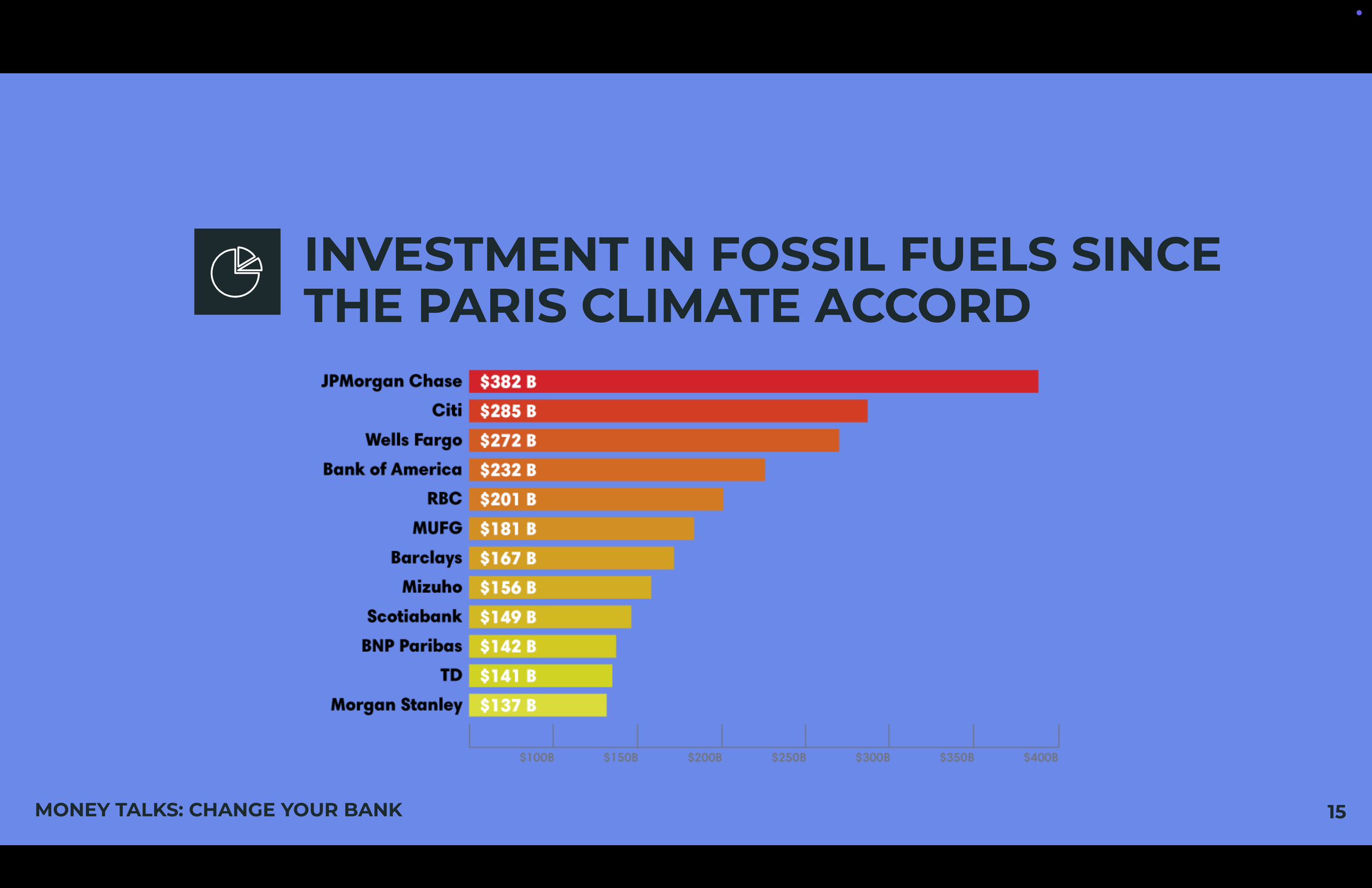
Slide 15 from the deck shows the numbers. JPMorgan Chase alone: $382B into fossil fuels. Barclays, Citi, Bank of America — all the usual suspects.
Changing your bank is boring admin…
but it’s probably the single biggest sustainability decision a bar will ever make.

The ice machine problem

This is the one that gets the biggest reaction at every trade show.
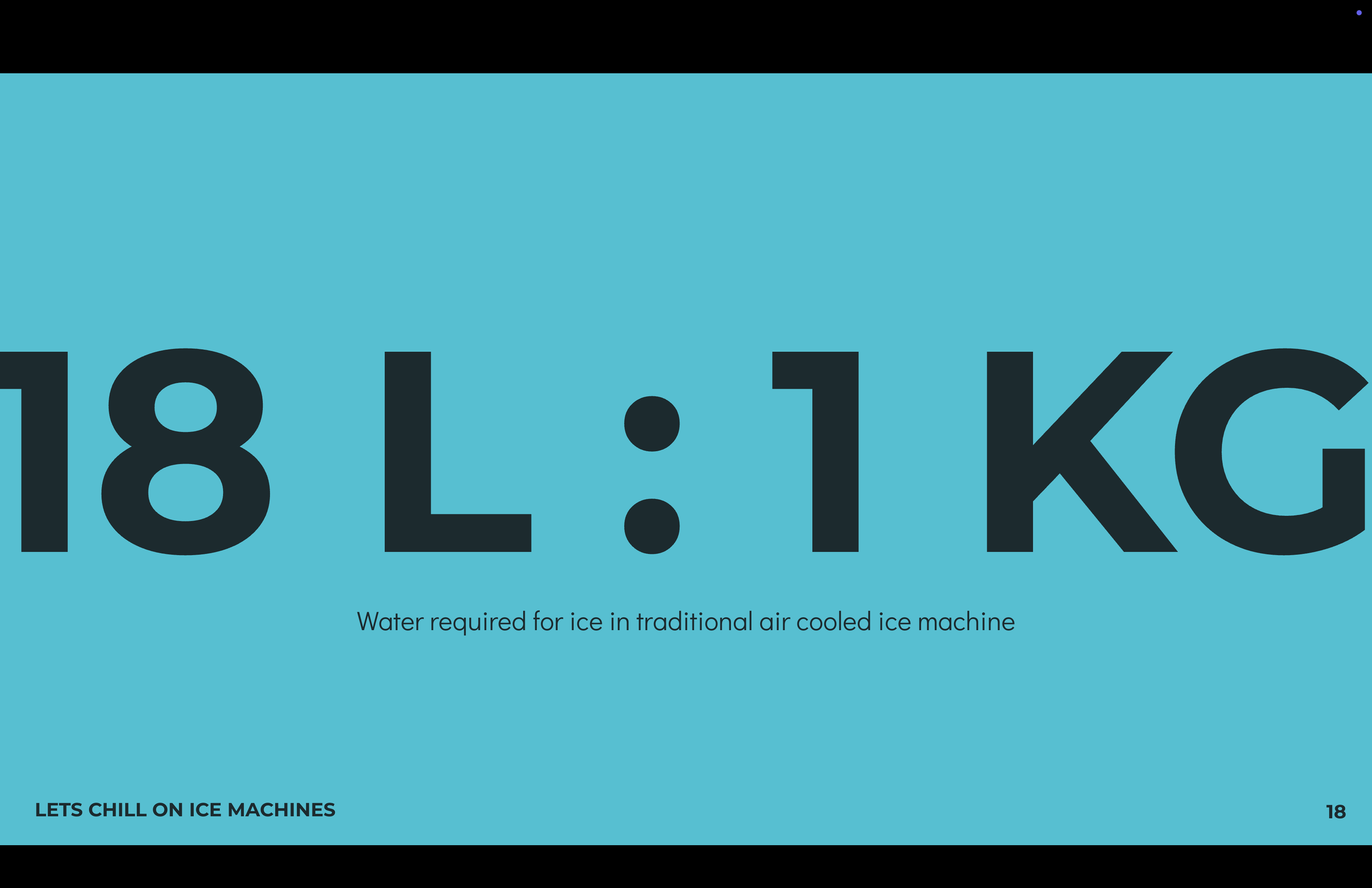
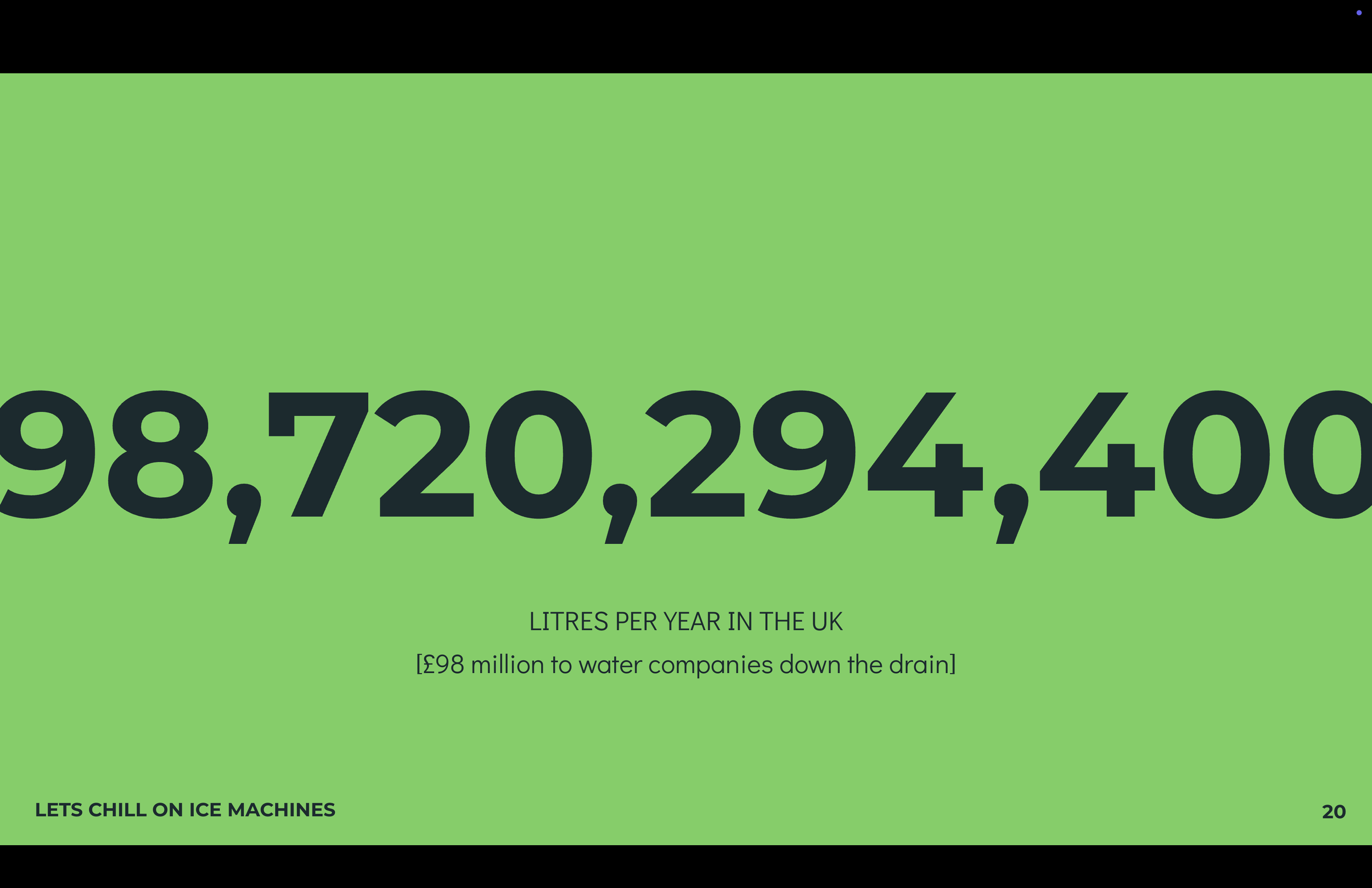
It takes 1L of water to make 1kg of ice.
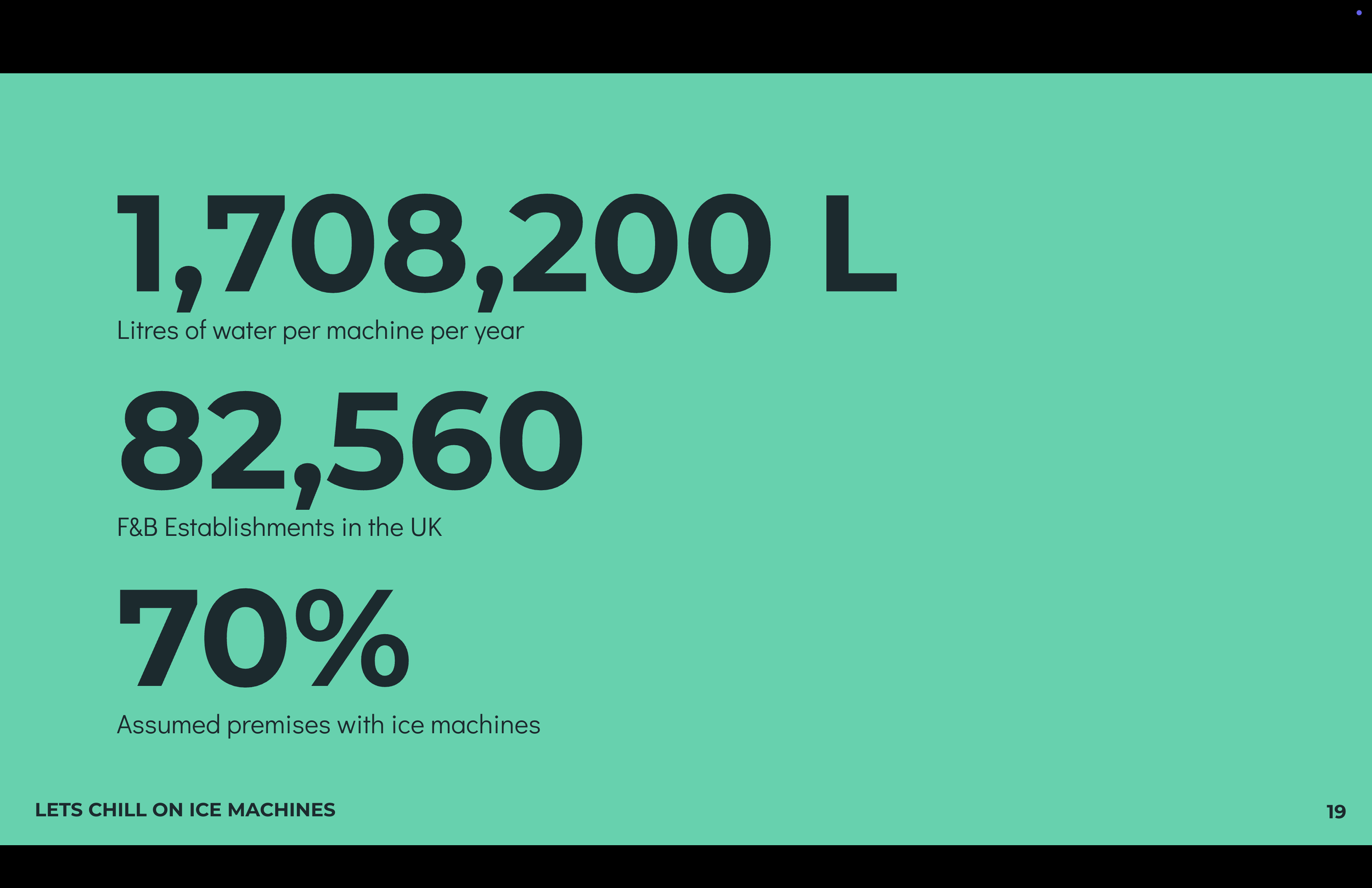
One machine uses around 1.7 million litres a year.
Scale that to UK venue numbers and you end up with nearly 100 billion litres of water wasted.
That’s your sustainability crisis — not the leftover lemon wedges in the drip tray.
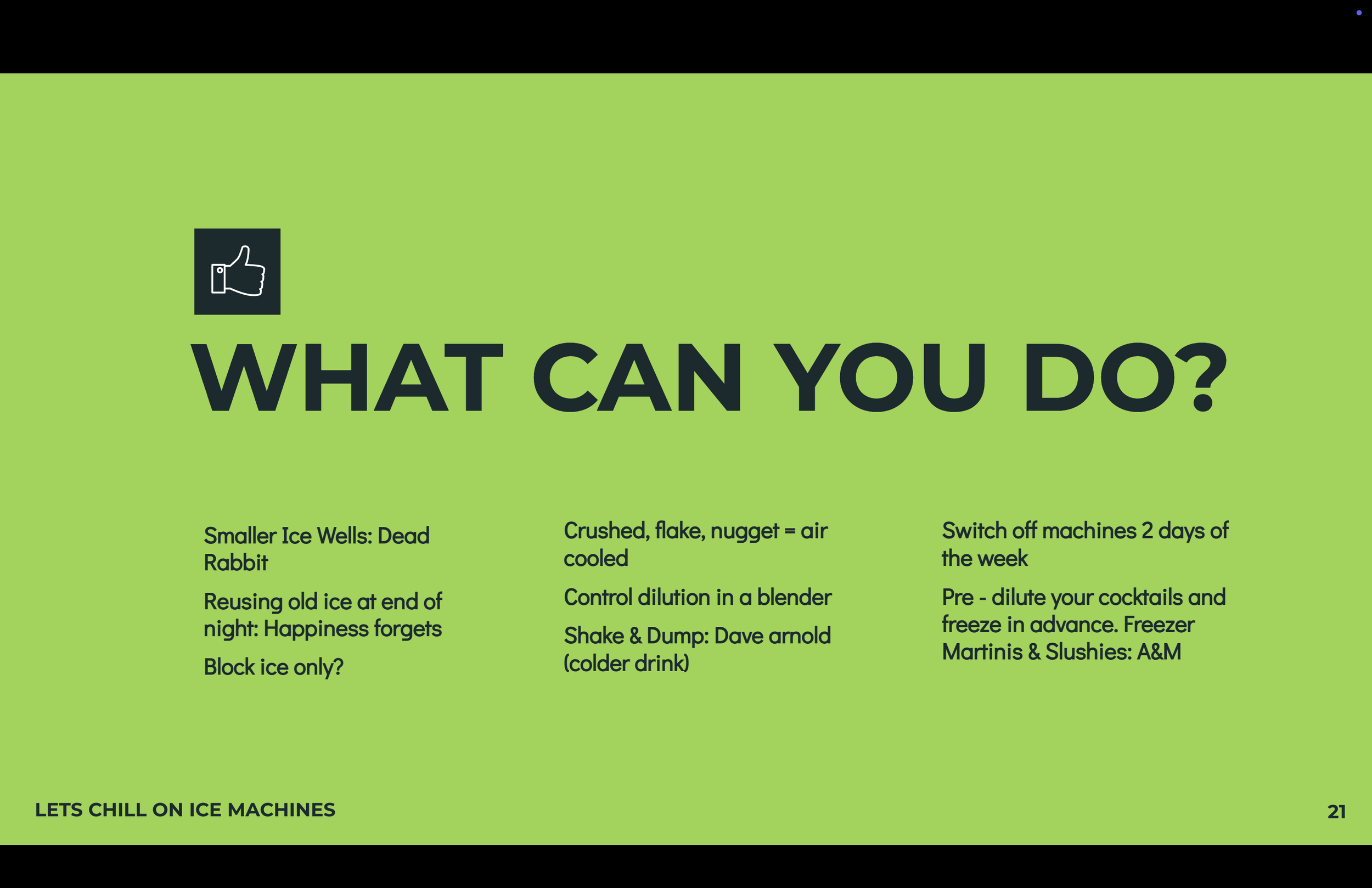
The fixes are simple: smaller wells, block ice, switching machines off, pre-diluting freezer cocktails, managing dilution properly. No fancy tech needed.
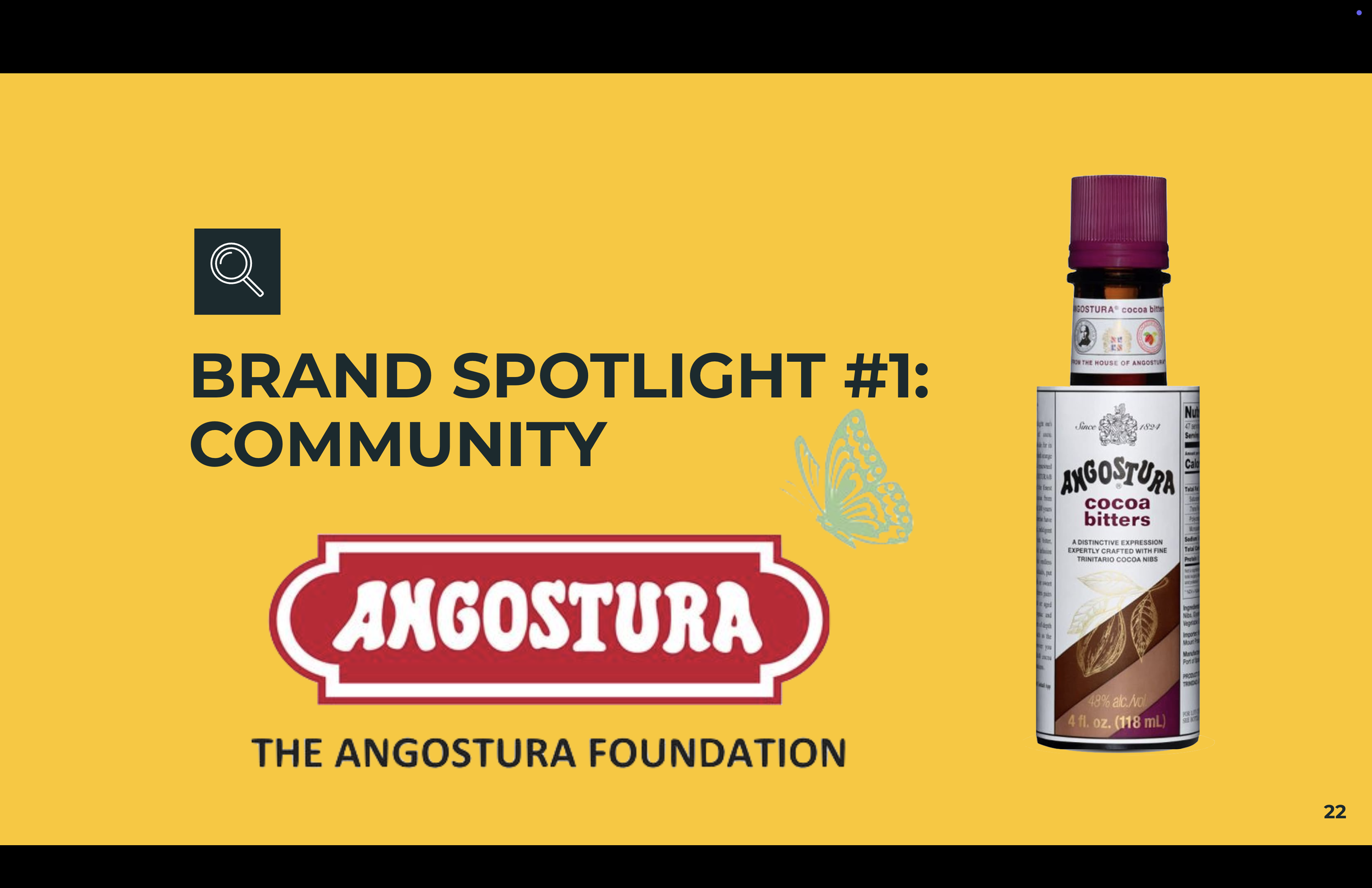
Community matters too — Angostura’s cocoa program
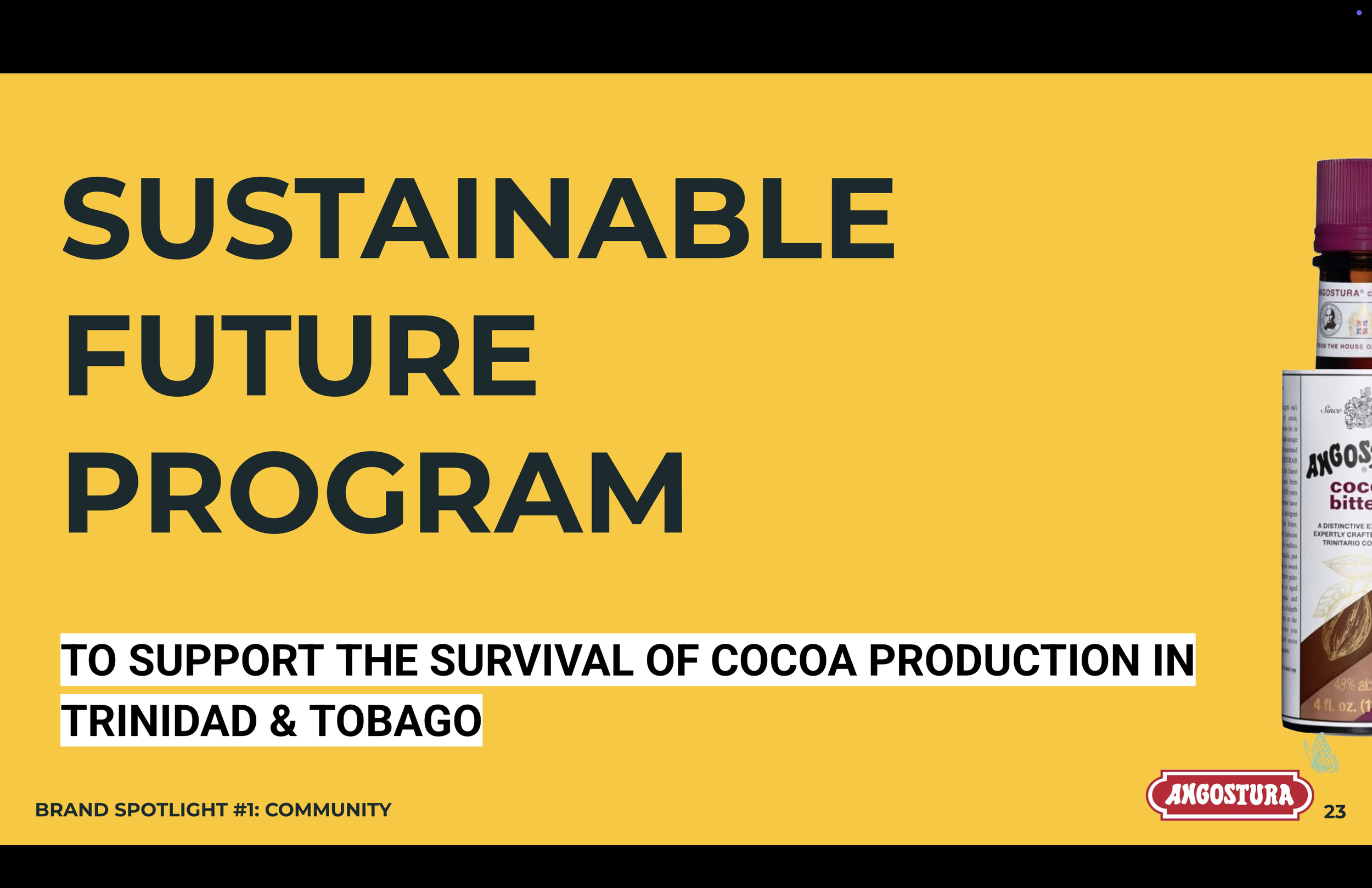
Angostura investing in cacao nurseries and farmer training in Trinidad & Tobago is what responsible sourcing actually looks like. Real support for real people in the supply chain.
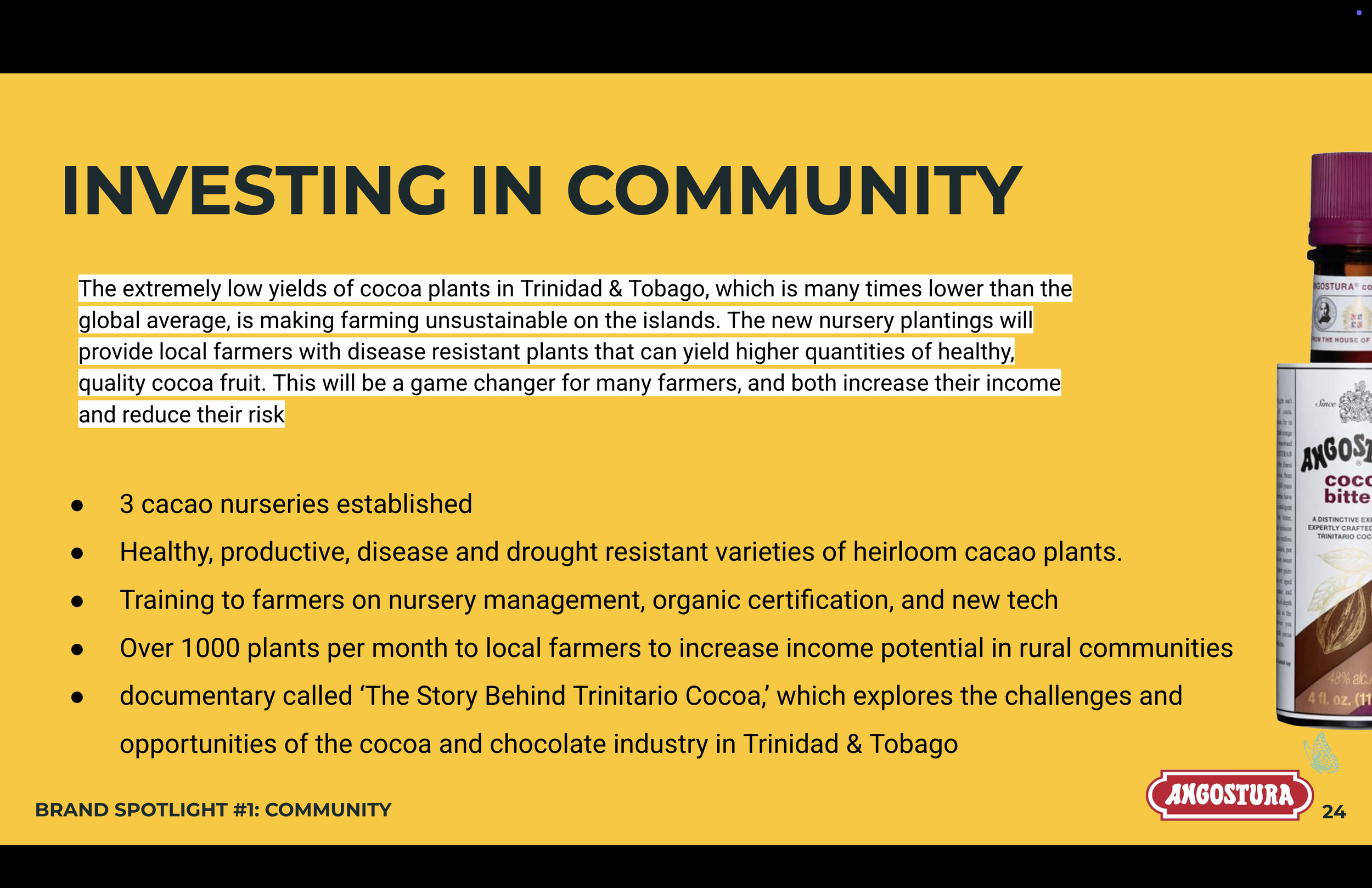

This is the type of brand behaviour that should influence your backbar.
Let’s talk beef

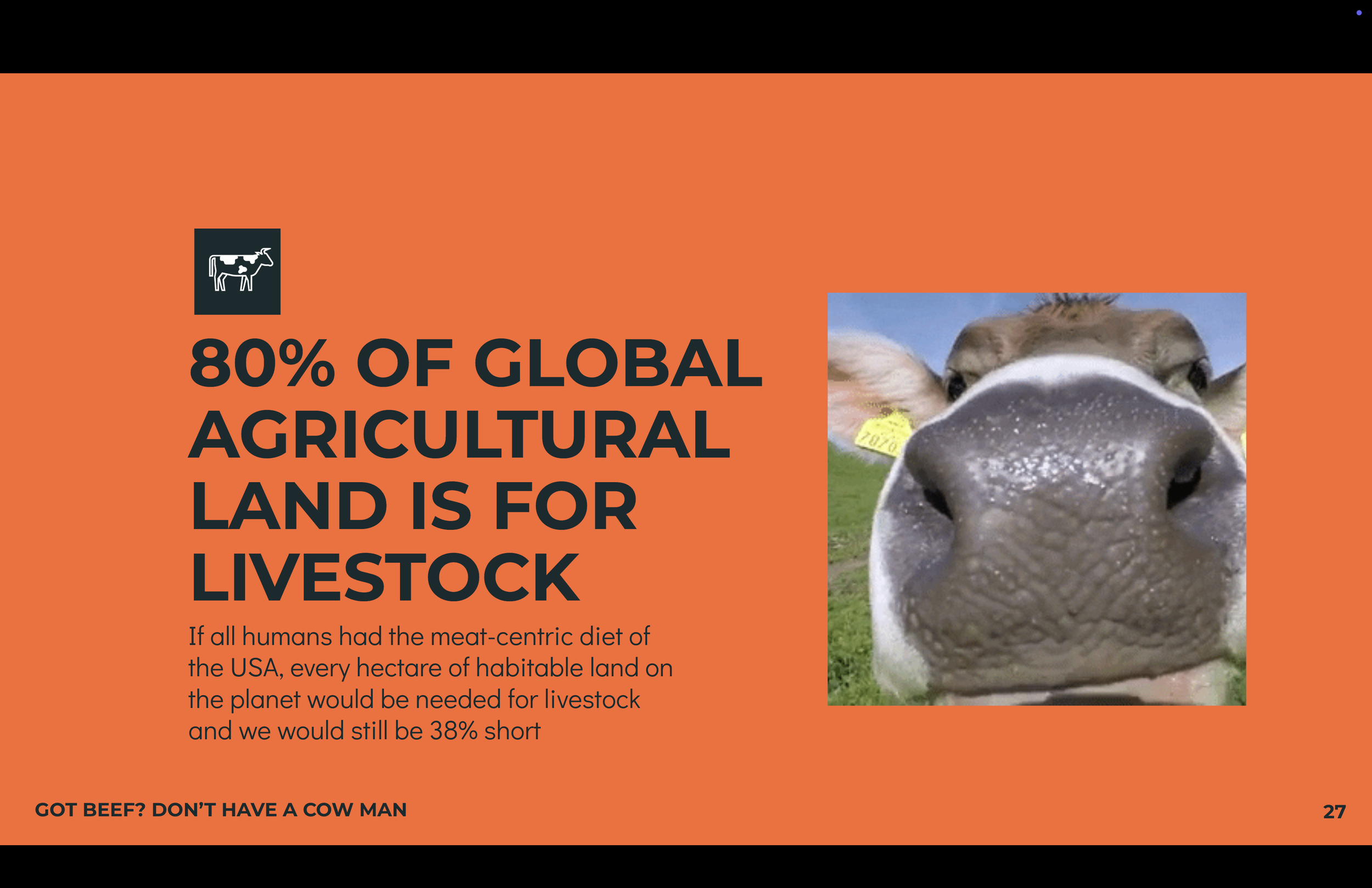
If the world ate like the USA, we’d run out of land. Literally.
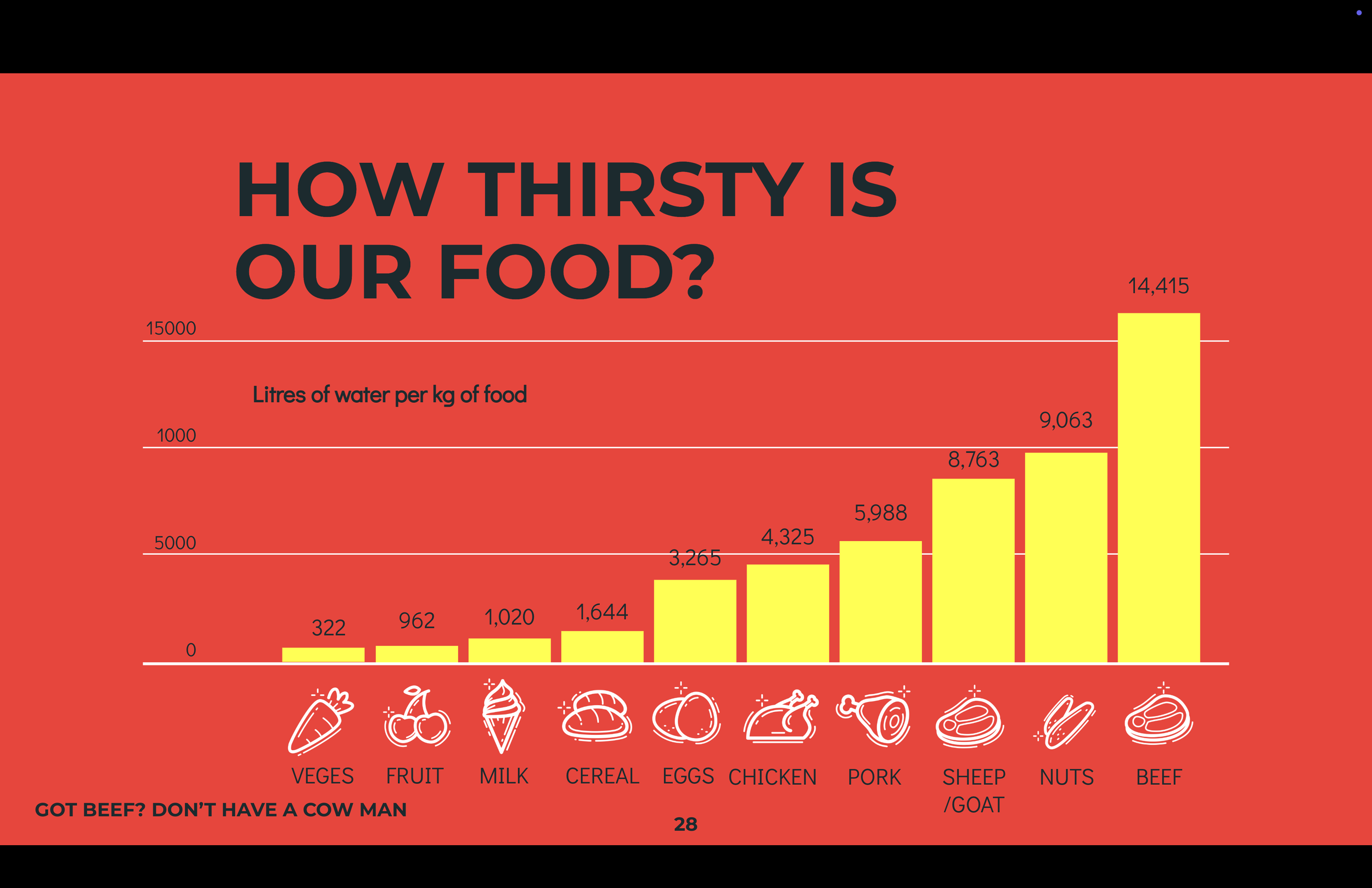
Beef takes 14,415 litres of water per kg.
Eighty percent of agricultural land globally exists for livestock.
And restaurants waste 40% of food produced.
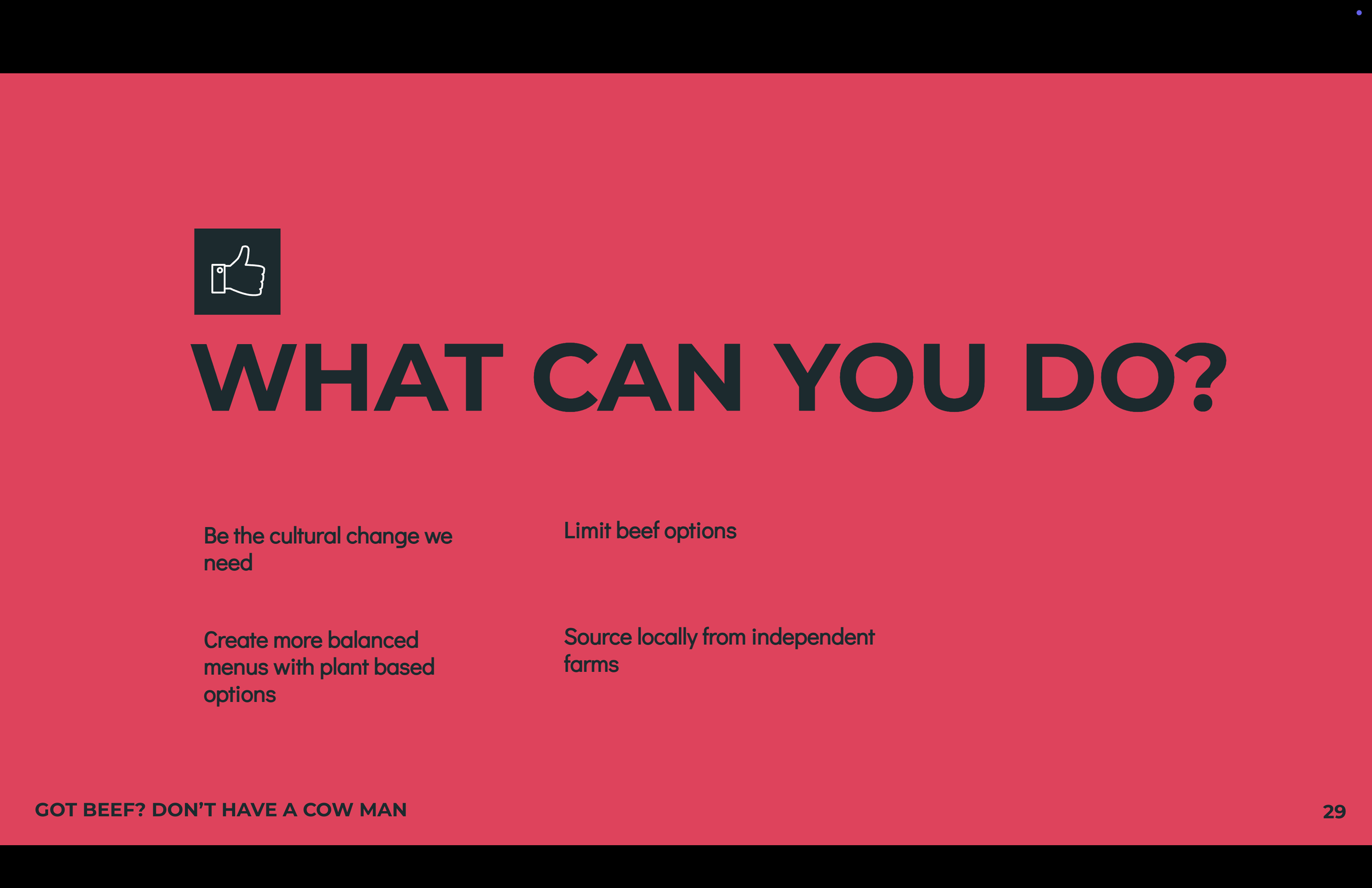
A sustainable menu isn’t anti-meat.
It’s anti-imbalance.
Offer more plant-led options. Reduce beef. Source properly.
It’s better for the planet. It’s better for margins.
Your backbar is a climate decision
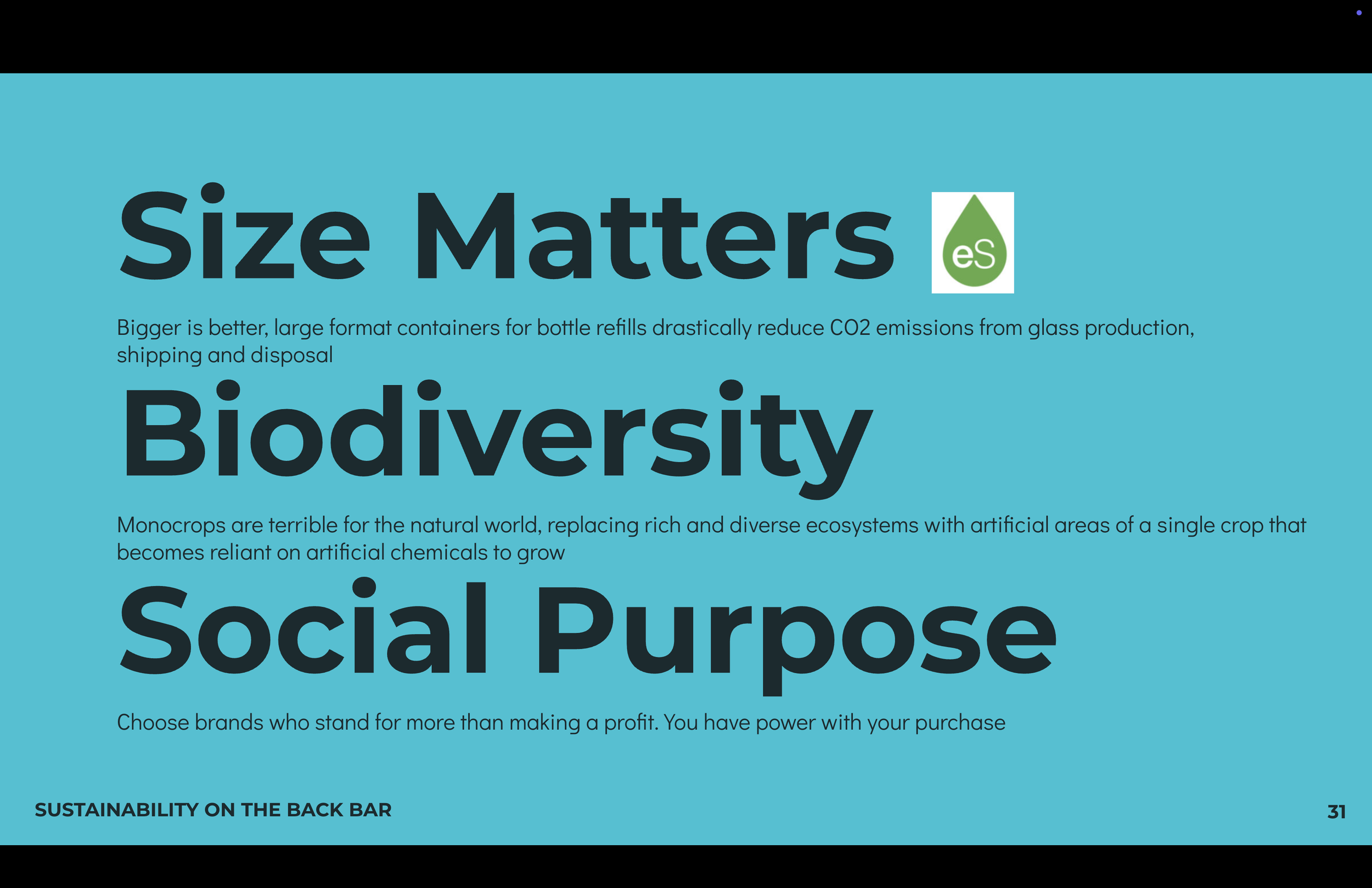
Bars spend 20–30% of their capex on spirits. Which means those brands’ supply chains become yours.
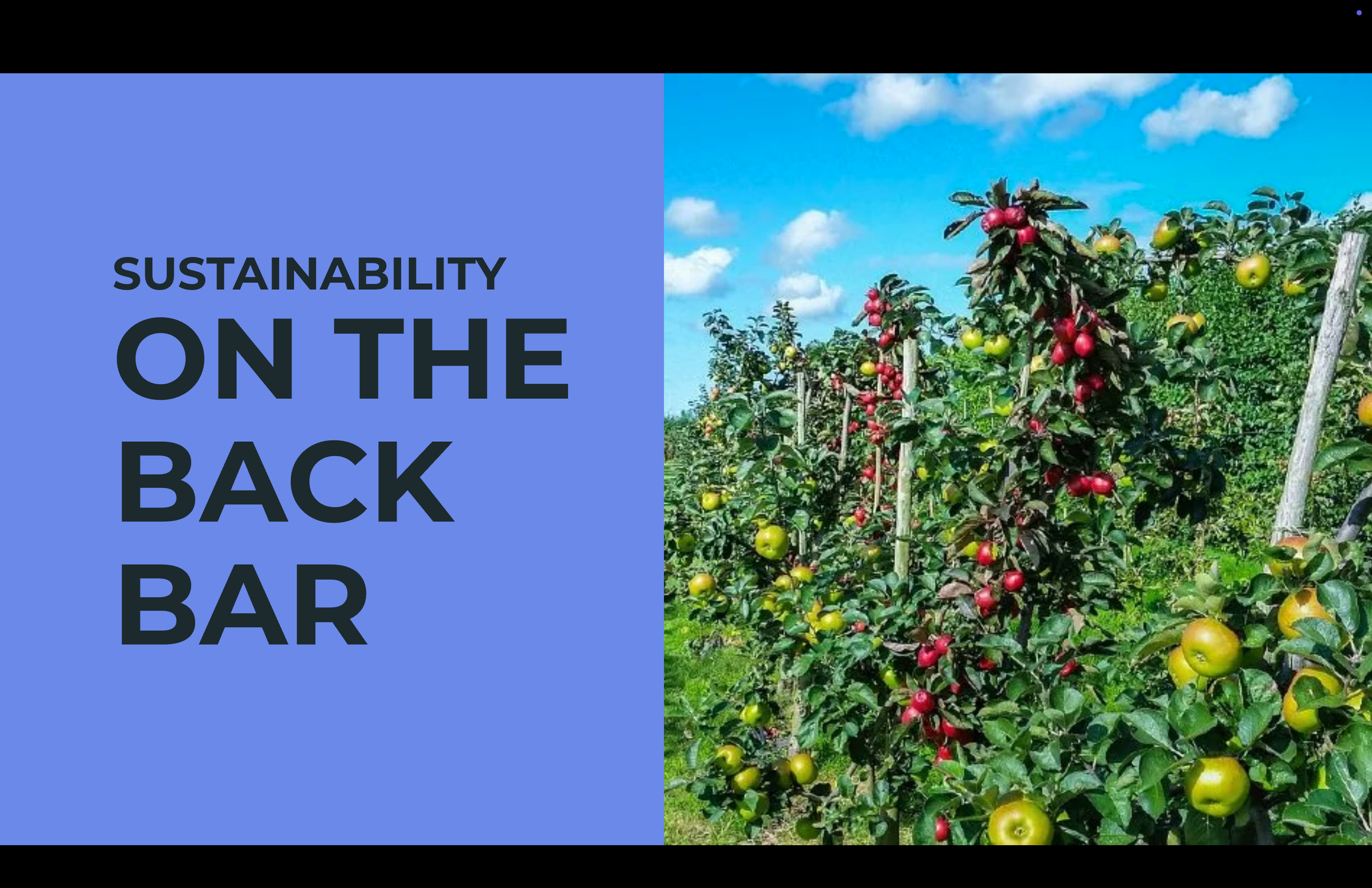
You can’t claim sustainability while stocking products built on monocrops, opaque sourcing, or weak environmental standards.
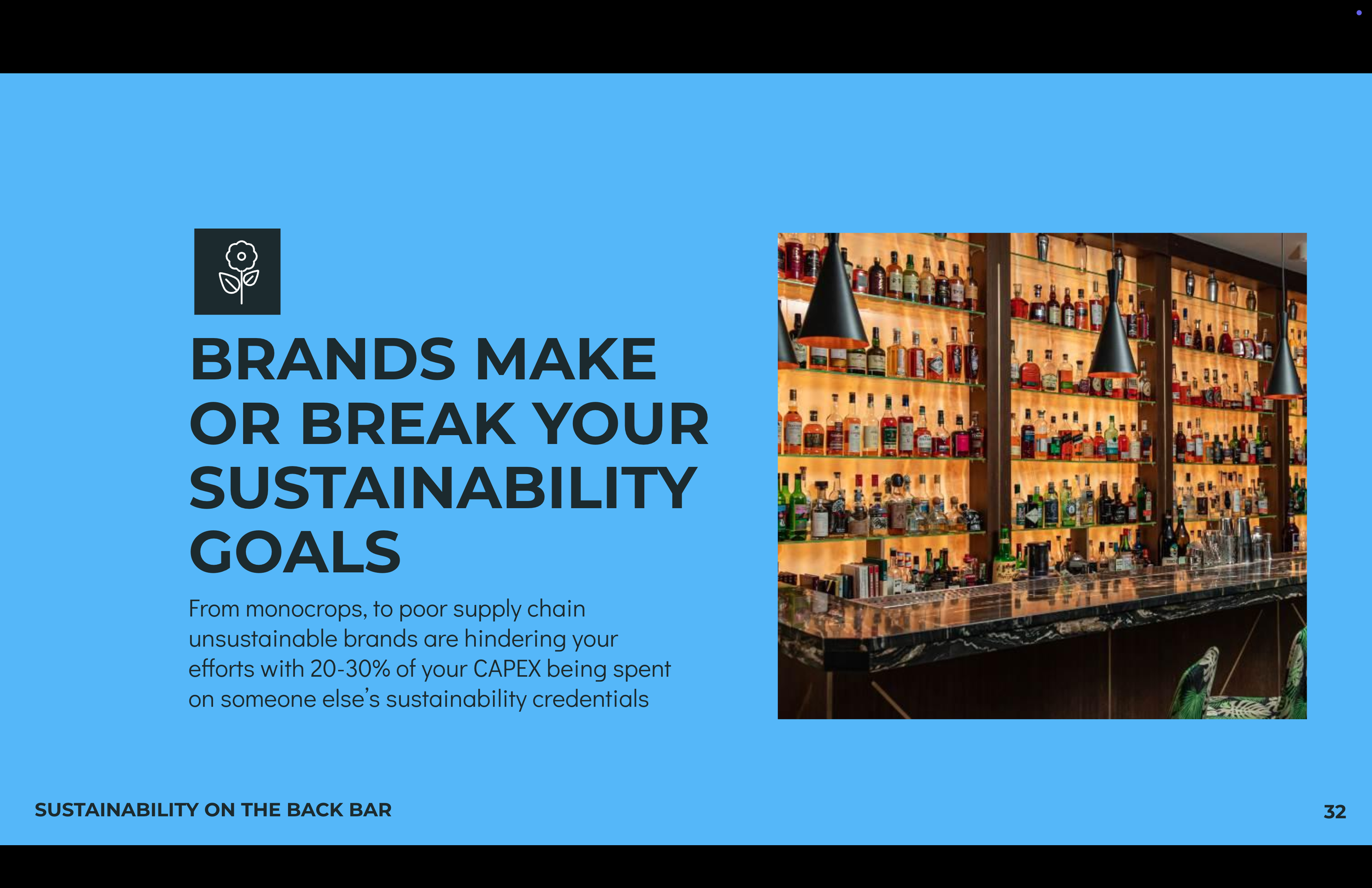
Choose better brands and your sustainability improves overnight.
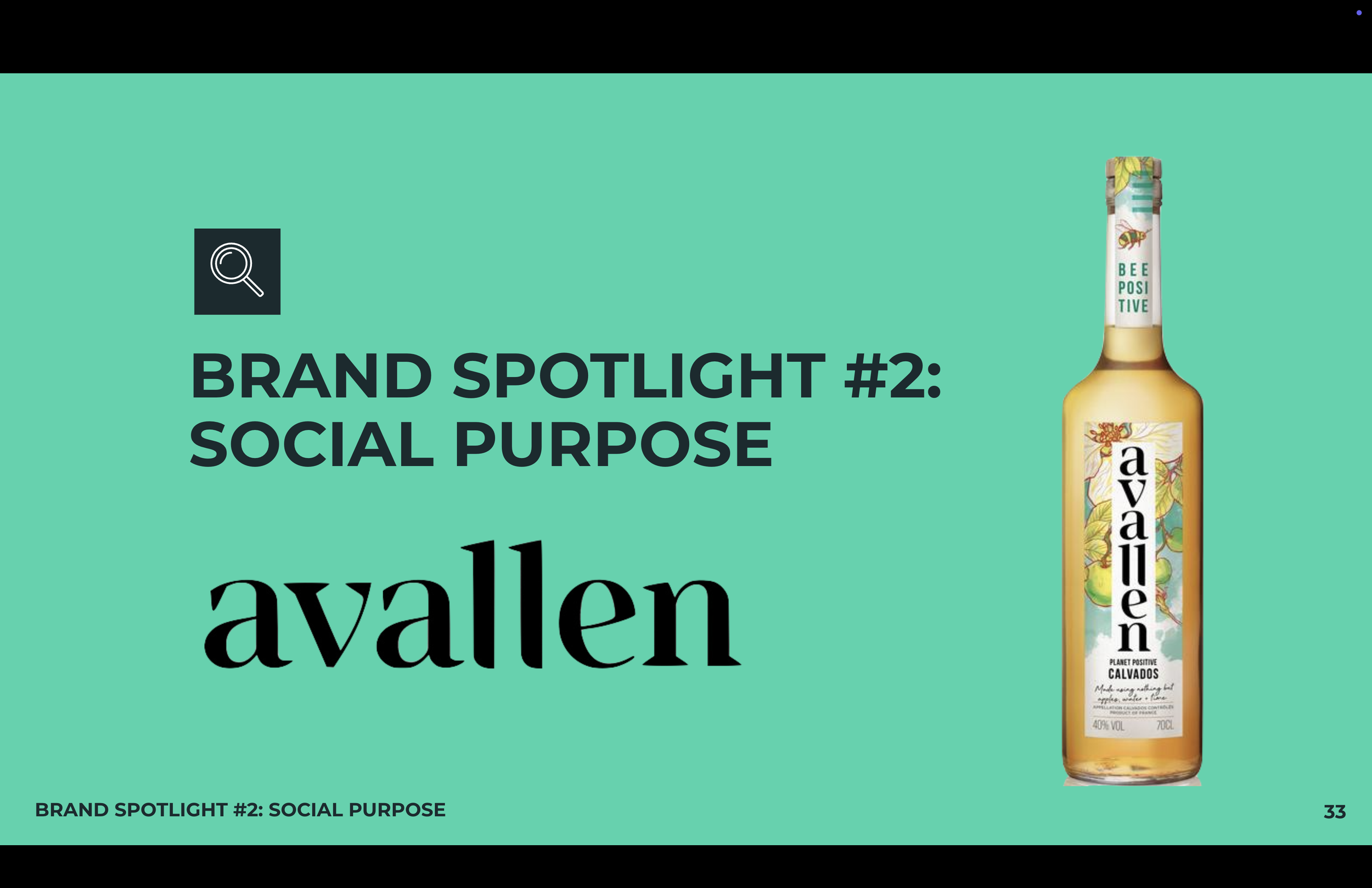
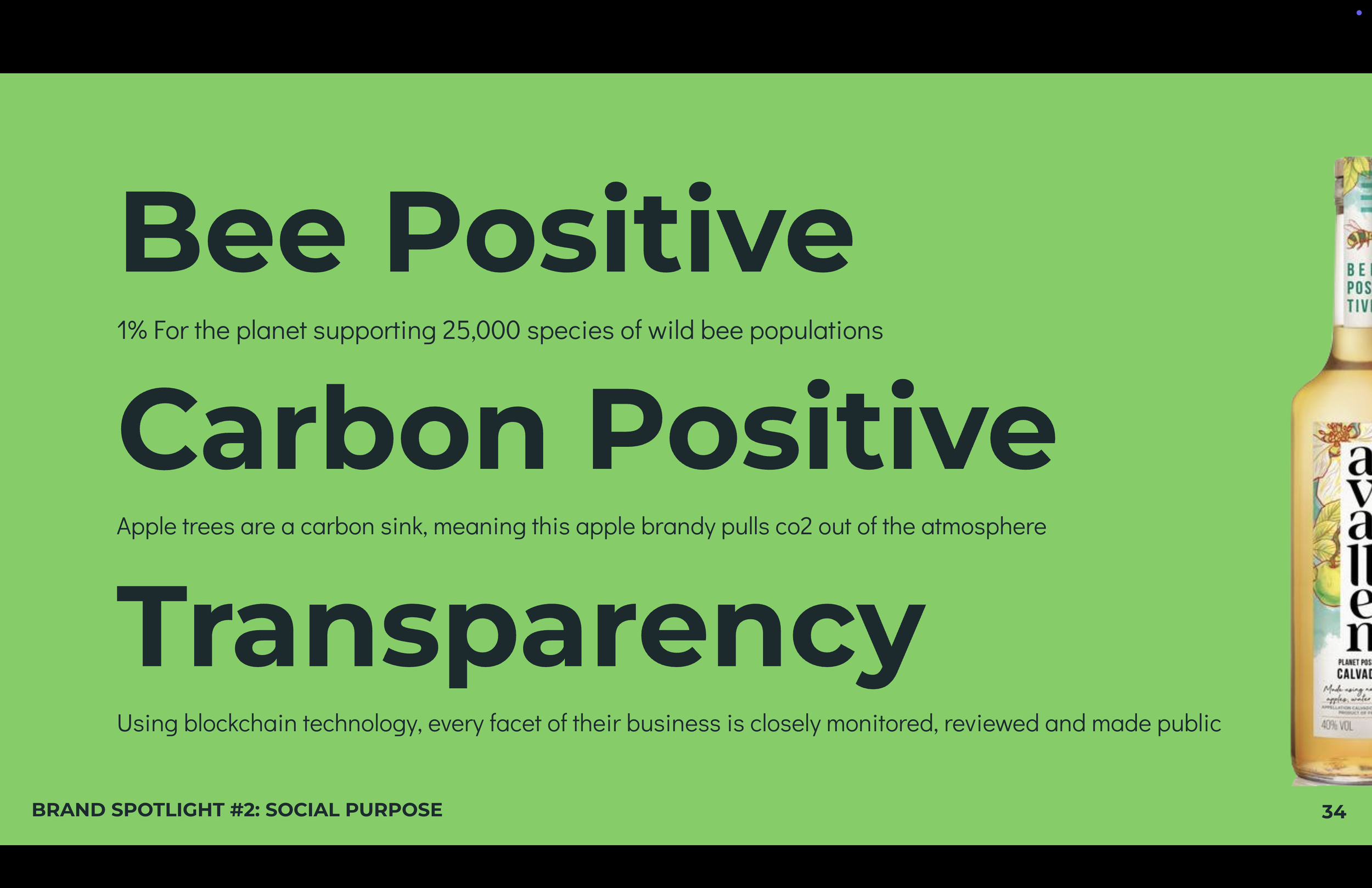
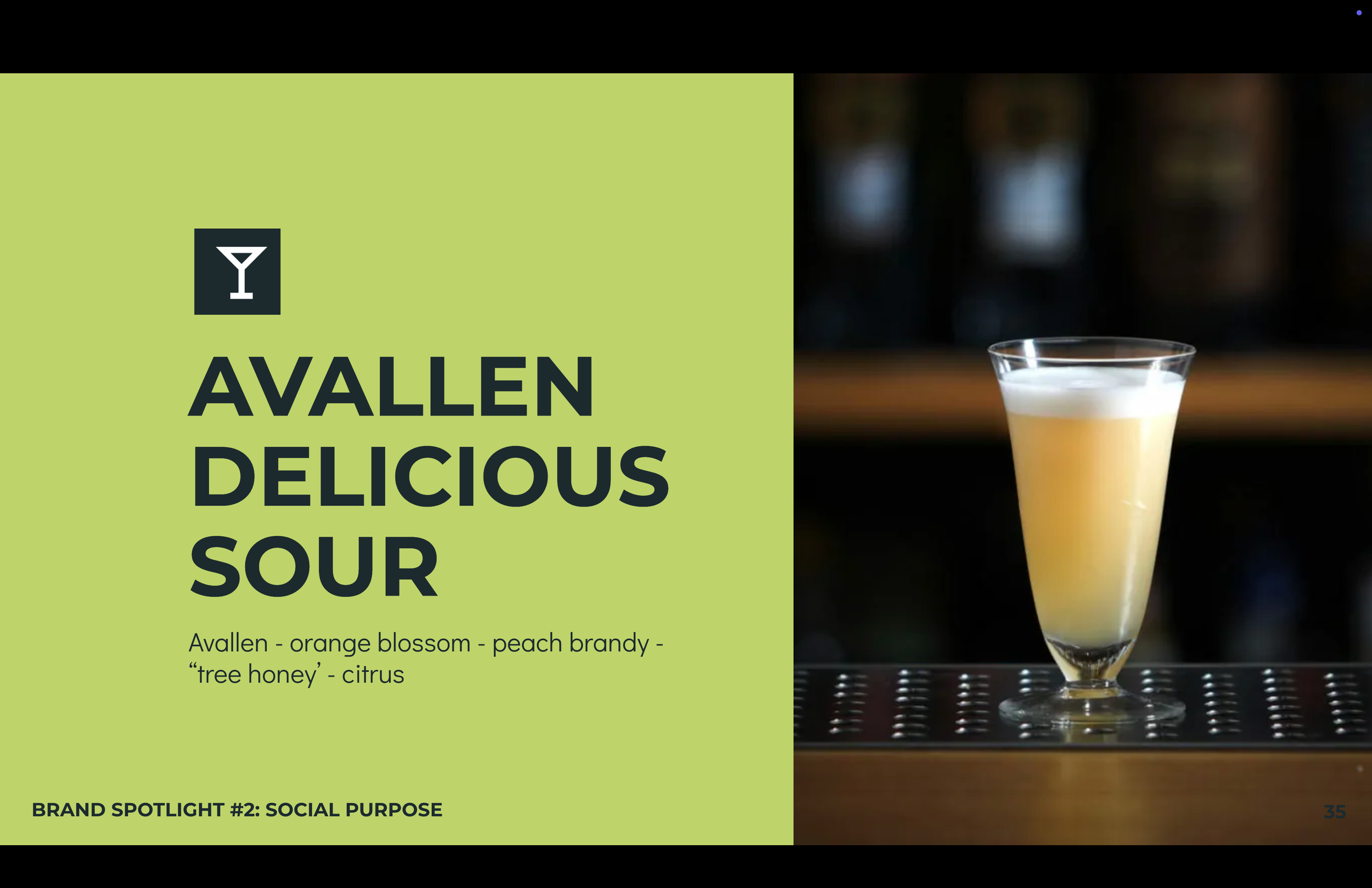
Avallen is a great example: bee-supporting, carbon-positive, transparent.
Waste: the unglamorous truth
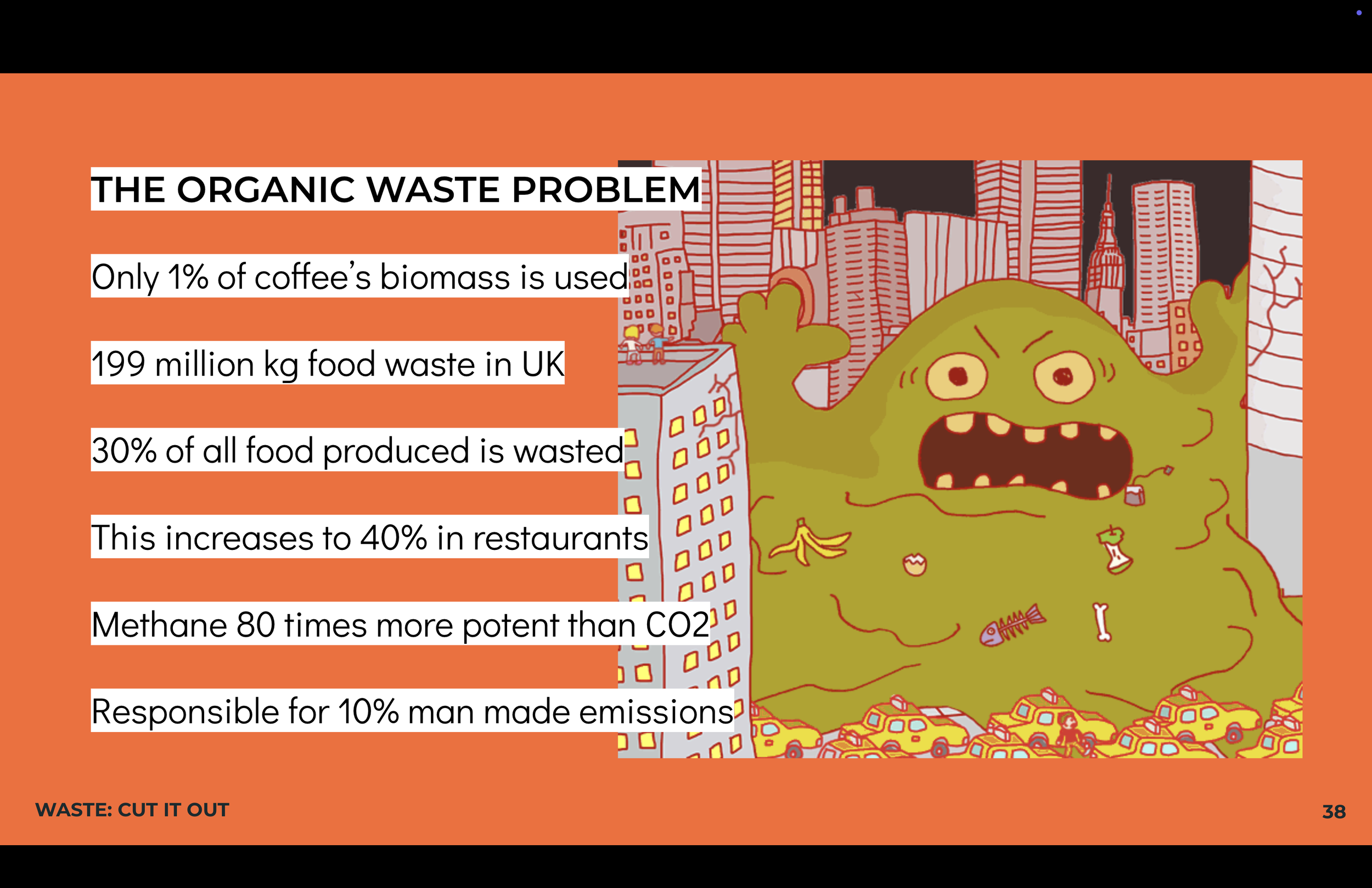
Organic waste produces methane that’s 80x more damaging than CO₂.
Only 1% of coffee biomass gets used.
Restaurants waste up to 40% of food.
Fixing this isn’t complicated:
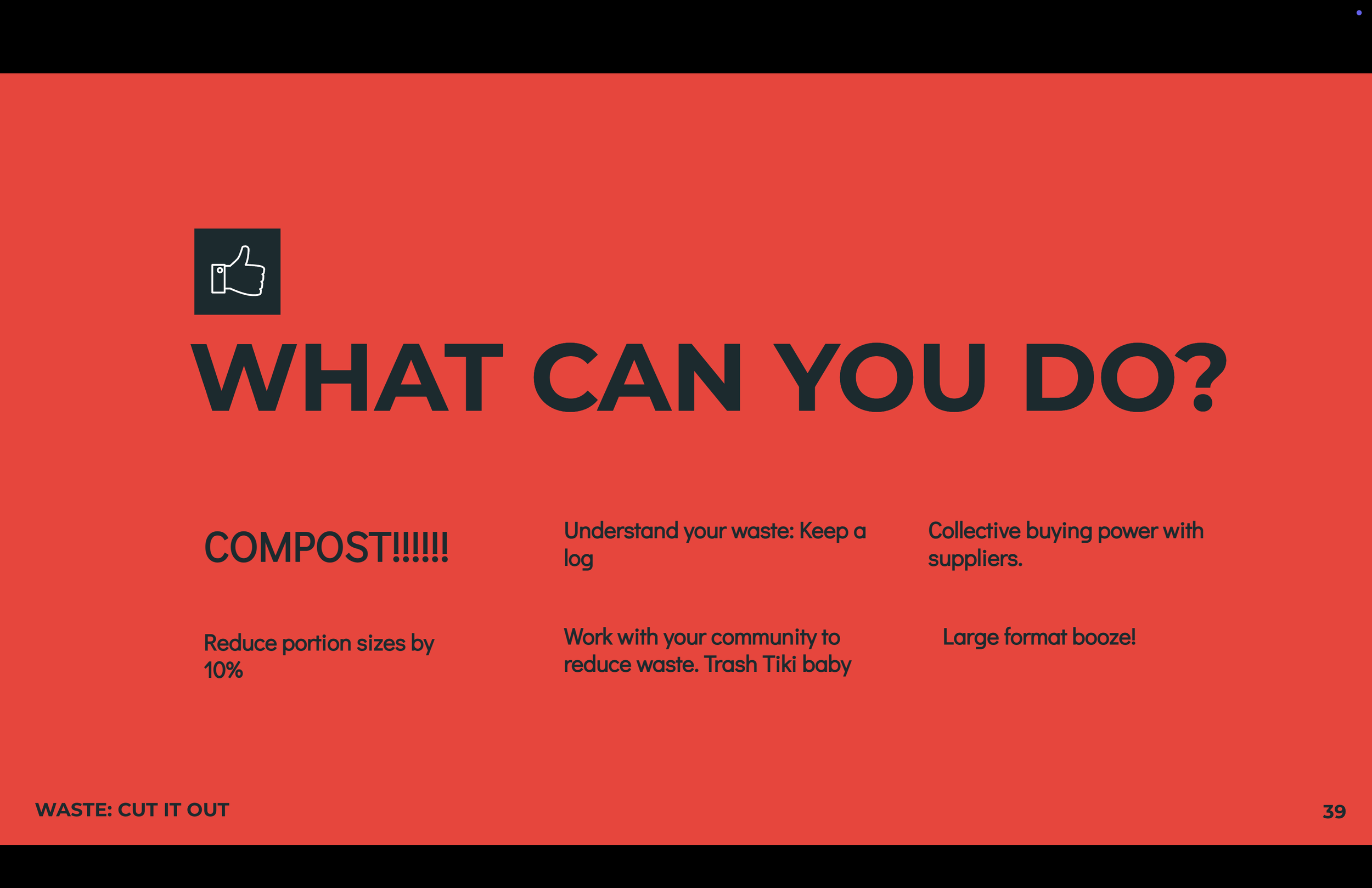
compost, track waste, reduce portions slightly, collaborate on purchasing, and use large formats.
Every venue can start this tomorrow.
Black Cow — circular spirits done properly
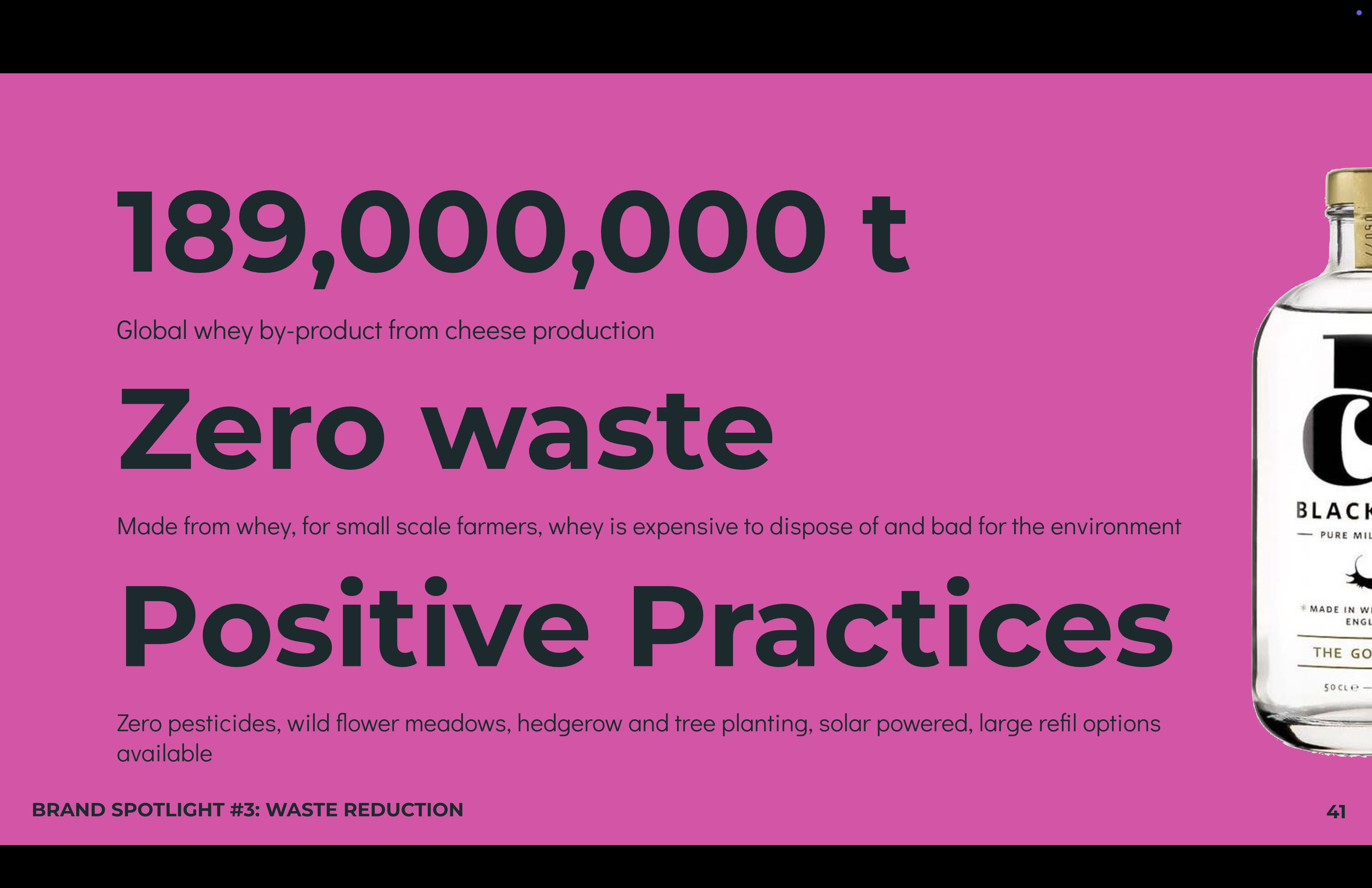
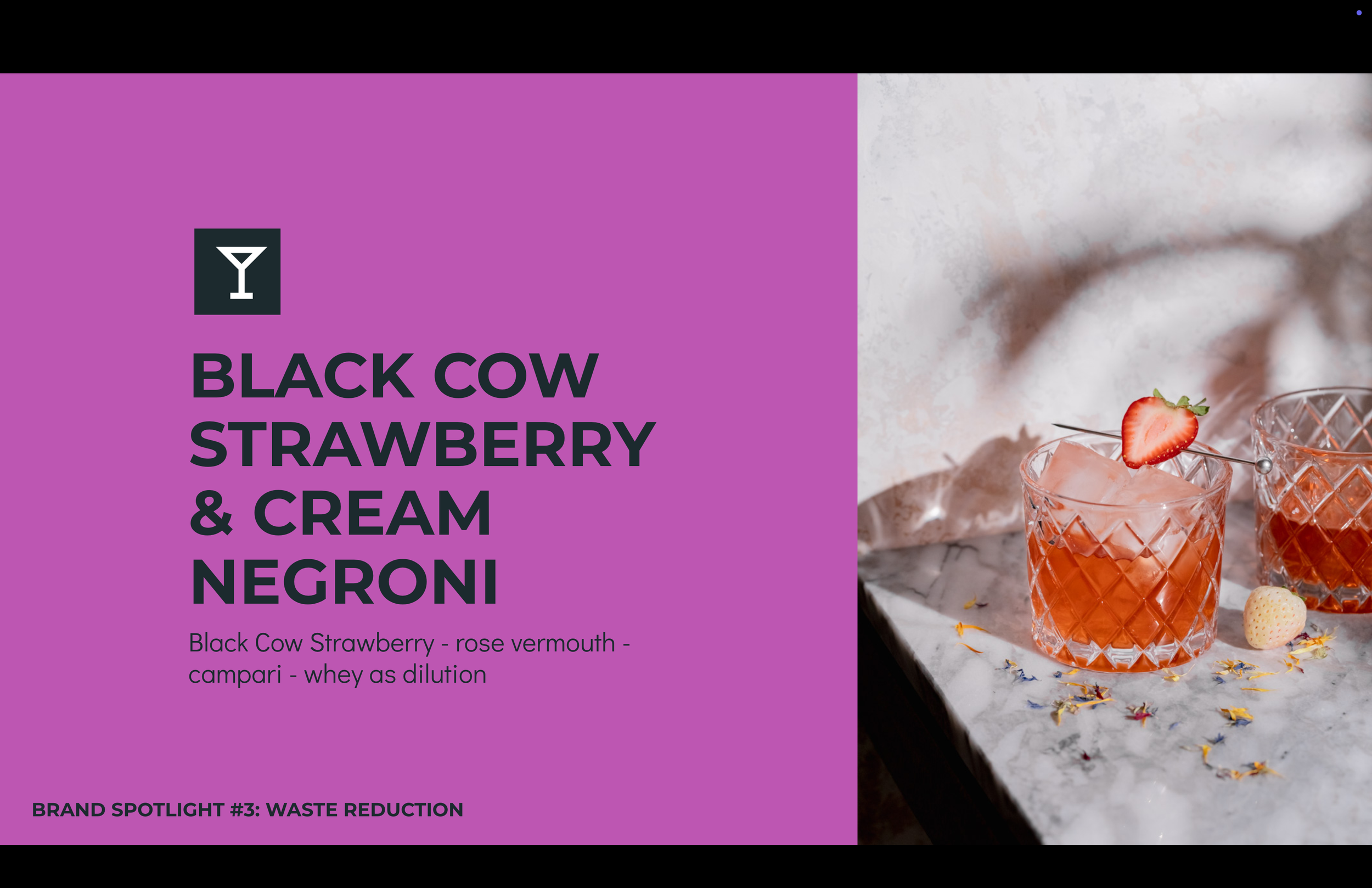
Whey is usually a disposal problem. Black Cow turns it into vodka.
Zero waste. Smart. And a solution to an agricultural challenge.
This is the kind of thinking that will define the next decade of drinks.
Outro — the real takeaway
After delivering this talk across five markets, the message lands the same everywhere: bartenders want to make a difference, but they’ve been handed the wrong targets.
Real sustainability in hospitality isn’t about squeezing every last drop out of a lemon.
It’s about how you bank, what you buy, where your water goes, what sits on your menu, and which brands you choose to put on the backbar.
It’s practical. It’s measurable. And it’s completely achievable.